Scoping and coordination
State-of-the-art review, competitor analysis, functional requirements and acceptance criteria. Definition of architectures and schedules, and coordination of mechanical, thermal and electronic partners.

Designing a complete system to measure passenger flows.
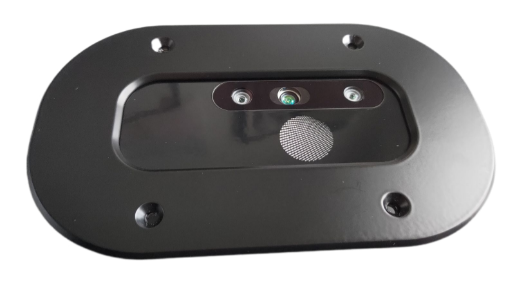
Development of an urban transport passenger counting solution in collaboration with the end client. The system combines 3D depth cameras and Wi-Fi device analysis.
State-of-the-art review, competitor analysis, functional requirements and acceptance criteria. Definition of architectures and schedules, and coordination of mechanical, thermal and electronic partners.
The router centralises data from the Wi-Fi sensor and camera blocks, then transmits it over 4G to a remote server. GPS supports mapping. RS232, Wi-Fi and USB3 interfaces, together with door synchronisation, support entry and exit counting.
Two-layer FR4 PCB design with Altium Designer, 9–36 VDC vehicle supply and 0–24 VDC inputs. Bare-metal ESP32 C firmware, RS232 / RS485 and GPIO. Extruded aluminium housing designed with SolidWorks, SurTec 650 RTU treatment and EN45545 considerations.
Four-layer FR4 board with a Phytec i.MX8 SOM, collecting streams from three USB3 cameras and communicating with the router over RS485. High-speed routing and impedance calculations. Power and RS485 daisy-chaining to two additional modules, with transport and integration constraints.
Comparison of i.MX8 / Cortex-A53 platforms and SOMs, selection research for 4G/5G routers and depth cameras, and study of materials and infrared protective glass. USB3 driver, serial communication and SD / NAND boot development.
Electronic and mechanical subcontractor selection, PCB and finish optimisation. Manufacturing documentation: bills of materials, drawings, Gerber, ODB++ and specifications. Assembly and wiring procedures, multisourcing, FMEA, test and adjustment benches, acceptance testing and packaging.
Three complete electronics, mechanical and wiring systems supplied, with full manufacturing documentation, corrections and production support. The case study on the original website describes the system as functional and ready for installation.
Let’s discuss your system, its constraints and the next step.